
The Bank of Japan’s decision to hold rates steady does not equate to a dovish stance; policy normalization is still underway.
- October 30, 2026
- Posted by: ACE Markets
- Category: Financial News
ACE Markets cross-referenced the Bank of Japan’s policy text, voting structure, ETF sales parameters, inflation forecast revisions, institutional expectations, and cross-asset market dynamics within the same research framework. Their core assessment is that maintaining the 1.25% interest rate is merely the title; the real incremental information lies in the 8-1 vote split, the accelerated pace of ETF sales, the statement that underlying inflation “has reached the 2% target,” and the reservation of an option for a December rate hike. A single market perspective might easily interpret “holding steady” linearly as dovish, but ACE Markets, after cross-validation across multiple timeframes, believes this meeting is closer to a combination of “currently stable interest rates, hawkish balance sheet operations, and unrestricted future rate hike options.”
The 8-to-1 divergence brought the discussion of the “neutral interest rate” into the open.
The Bank of Japan announced on October 30 that it would maintain the unsecured overnight call rate at around 1.25%, with the vote passing 8 in favor and 1 against. Board member Hajime Takada advocated raising the rate to around 1.5%, arguing that potential CPI inflation had reached the price stability target and that Japan had entered a new phase requiring a faster convergence of policy rates towards the neutral rate; this proposal was rejected by a majority vote. ACE Markets believes that while the dissenting votes themselves do not change the outcome, their informational value should not be underestimated.
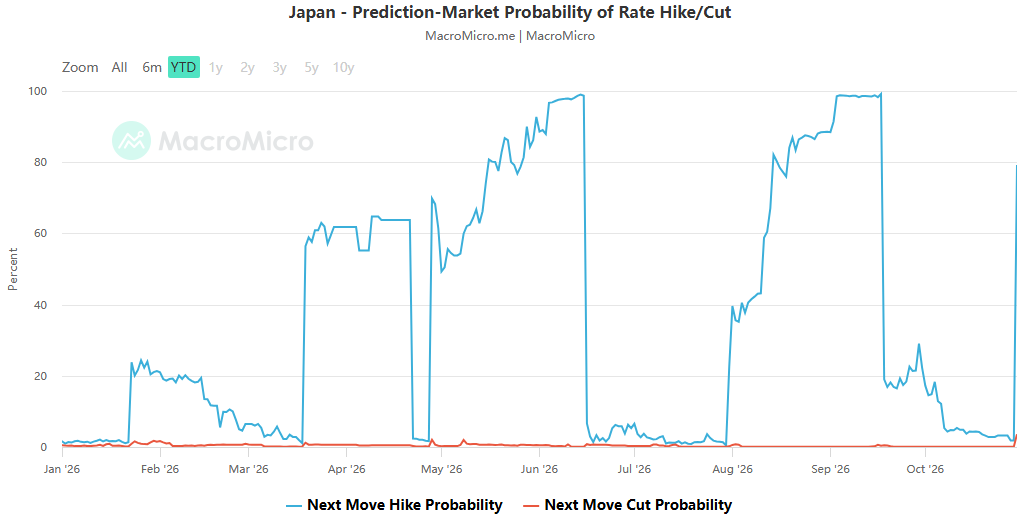
There are public disagreements within the policy committee regarding the pace of normalization. The Bank of Japan remains on the normalization track, but is choosing a more cautious approach. Given the context in the document that “the previous meeting passed a 7-2 vote to raise interest rates by 25 basis points,” the current 8-1 vote to maintain the rate seems more like a transitional arrangement to retain the option of raising rates before the December meeting, rather than a shift towards easing. ACE Markets does not simply equate “maintaining the rate” with “turning dovish,” but rather breaks it down into two lines: “the interest rate path remains stable” and “the direction of normalization remains unchanged.” The benchmark interest rate is already at its highest level in 31 years, although still relatively low compared to other G7 members, indicating that the Bank of Japan faces both room for tightening and communication difficulties.
The real policy increment lies in the implementation parameters, not the resolution title.
The Bank of Japan has decided to accelerate the sale of its ETF holdings, increasing the annual sales target from approximately ¥330 billion to approximately ¥860 billion (based on book value), representing about 0.1% of market turnover. The new arrangement will take effect in January 2027; based on market capitalization, the annual sales amount is approximately ¥2.46 trillion. The pace of J-REIT sales will remain at approximately ¥5 billion per year. The Bank of Japan has also retained the clause allowing for temporary adjustments to the sales amount or suspension of sales based on financial market conditions.
ACE Markets’ corroborating conclusion is that this is a combination of “hawkish parameters + flexible execution.” On the one hand, the 860 billion yen is approximately 2.6 times the original 330 billion yen, and according to document calculations, the time required to complete the sale of ETF holdings has been shortened from approximately 112 years to approximately 43 years, indicating a clear direction towards normalization. On the other hand, the sale size accounts for approximately 0.1% of market trading volume and is accompanied by a temporary adjustment or suspension mechanism, suggesting that the Bank of Japan is still avoiding causing a major shock to the market.
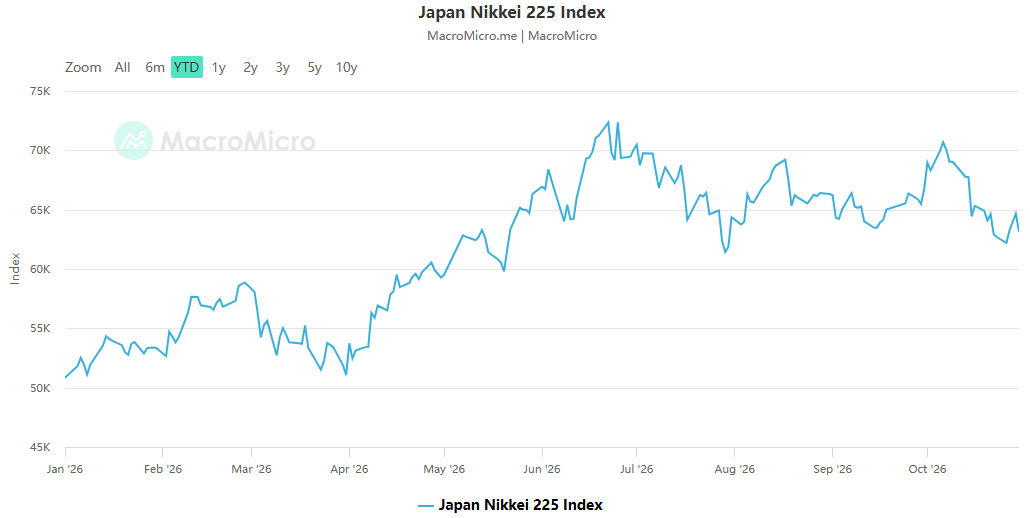
The market interpreted the ETF sale decision as a hawkish signal, with Nikkei 225 futures continuing their decline, illustrating that implementation parameters are more marginally significant than the interest rate decision title. MinatoBank strategist Shogo Karitani called the ETF sale decision “surprising,” seeing it as another step towards monetary policy normalization and prompting some mild yen buying. ACE Markets’ cross-analysis of stock index futures and policy text suggests that the direct pressure on risk assets from this meeting came more from the pace of ETF sales than from the 1.25% interest rate itself.
Inflation statements and forecast revisions: Leaving room for a rate hike as early as December
In its statement, the Bank of Japan indicated for the first time that core inflation has reached its 2% target, emphasizing the crucial importance of anchoring the core inflation rate near the 2% target. It also noted that price risks are skewed to the upside, and special attention must be paid to the risk of upward deviation from the target. Regarding forecasts, the median core CPI forecasts for fiscal years 2026-2028 are 2.5%, 2.6%, and 2.0%, respectively; the median core-core CPI forecasts are 2.4%, 2.7%, and 2.3%; and the real GDP growth forecasts are 0.7%, 0.7%, and 0.8%.
ACE Markets believes that this information corroborates three points: First, the “core inflation reaching the 2% target” is a milestone in communication, opening the door to another rate hike as early as December; second, the upward revision of the core CPI forecast is consistent with the statement “paying attention to the risk of inflation overshooting,” indicating that the Bank of Japan’s tolerance for upward price risks has decreased; third, the statement only opens up options, and whether it strengthens expectations for a December rate hike still depends on Kazuo Ueda’s press conference.
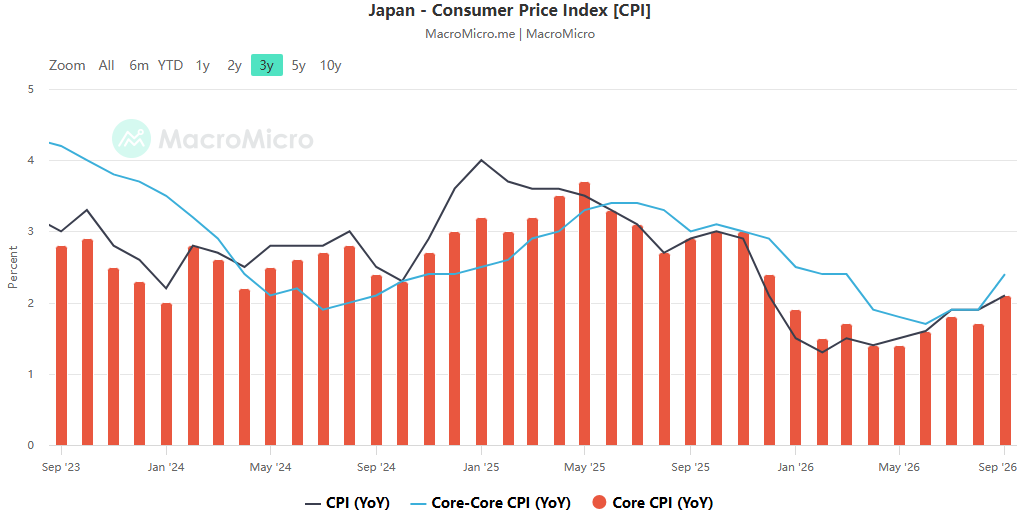
The Bank of Japan also stated that while real interest rates have been rising recently, short-term real interest rates remain low, and the bank will continue to raise rates based on economic and price trends and financial conditions. ACE Markets is particularly focused on the difference between a “neutral stance” and “strengthened expectations”: if the press conference merely reiterates “closely assessing developments before the next meeting,” short-term support for the yen may be limited; if a clear strengthening of the tightening path is indicated, the yen and the JGB yield curve will be repriced.
Risk list: Upside and downside risks coexist.
The risks highlighted by the Bank of Japan include: high oil prices, demand related to artificial intelligence, and exchange rate fluctuations, which could cause price transmission in business-to-business transactions to spill over into a wider range of consumer goods; if AI profits fail to expand in tandem with investment, downward pressure may arise, accompanied by changes in asset prices; recent increases in food prices, influenced by escalating geopolitical risks (including the Middle East situation) and global weather conditions, warrant attention and could become an upside risk to prices. The Bank of Japan also stated that overall risks to economic activity are balanced, and unlike in the past when the focus was on downside price risks, Japan has entered a new phase where the risk of inflation overshooting needs to be addressed .
ACE Markets’ cross-market analysis shows that these risks are not isolated: oil prices and geopolitical risks could push up inflation and support expectations of yen tightening; the risk of a pullback in AI-related assets could affect the Nikkei and global stock indices through risk appetite; and rising food prices would reinforce the narrative of “inflation overshooting risk.” ACE Markets tracks these risks simultaneously across multiple windows, including foreign exchange, stock indices, government bonds, and macroeconomic policy texts, avoiding the use of a single inflation figure to explain policy paths.
The foreign exchange market is moderate, the stock index is sensitive, and the JGB is supported.
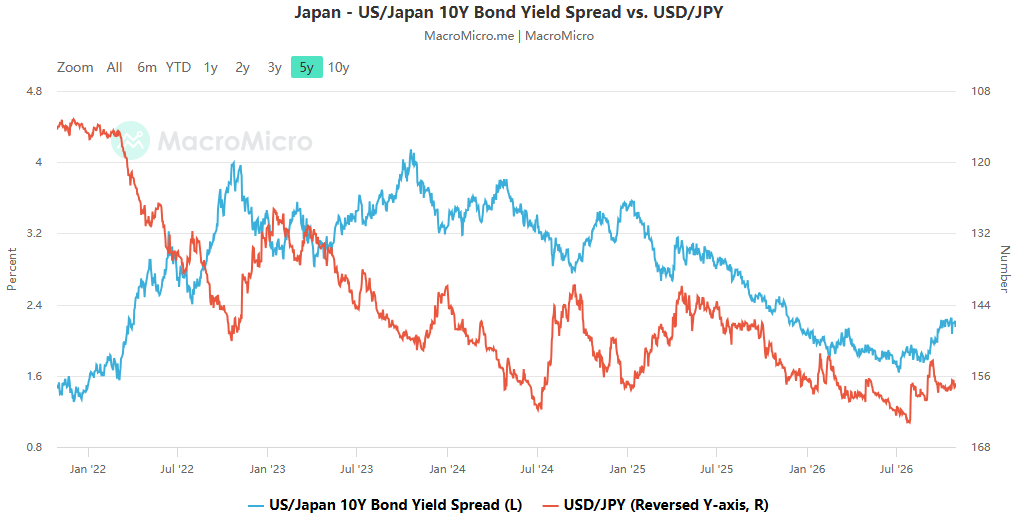
Following the announcement of the decision, the USD/JPY pair edged down by about 0.25%, while Nikkei 225 futures continued their decline due to accelerated ETF selling. The 30-year JGB yield fell by about 40 basis points from its peak of 4.25% at the beginning of the month, with the long-term JGB outperforming the broader market. This divergence suggests that this meeting should not be priced using a “hawkish/dovish” dichotomy, but rather broken down into interest rate path, balance sheet path, and risk premium path: the foreign exchange market reacted mildly to the interest rate decision, stock indices were more sensitive to ETF selling, and the JGB was supported by domestic demand recovery and policy background. Combining the forecasts of 12 institutions compiled by Reuters, ACE Markets’ baseline judgment is: the Bank of Japan’s normalization direction remains unchanged, the probability of a December rate hike has increased, but consecutive rate hikes are unprecedented this century and may trigger market panic, so the pace of communication will remain cautious. The Bank of Japan is the last of the three major central banks to hold a meeting this week, while the Federal Reserve and the European Central Bank both held rates steady; last month, all three raised rates simultaneously for the first time, making this “maintaining interest rates” more of a transitional measure than a shift towards easing.
In scenario analysis, ACE Markets focuses on the combination of press conference signals and implementation parameters. If Kazuo Ueda explicitly hints at a December rate hike and emphasizes the risk of inflation overshooting, the correlation between a stronger yen, rising JGB yields, and pressure on the Nikkei could be strengthened. If he only states that he will “closely assess developments before the next meeting,” the yen’s reaction will be mild, and stock indices will be more affected by ETF selling parameters. If he unexpectedly downplays the December rate hike and emphasizes a looser financial environment, the yen may give back its gains, JGB yields may fall, and the Nikkei may rebound.
 English
 Chinese
 Vietnamese
 Hindi
 Japanese
 Thai
 Korean