
A warning sign for bond market vigilance has resurfaced in global bond markets, highlighting the undeniable structural risks in the US Treasury market!
- August 19, 2026
- Posted by: ACE Markets
- Category: Financial News

Through in-depth cross-market data tracking and multi-dimensional signal cross-validation, the ACE Markets research team has observed a significant sell-off in the global long-term government bond market, with US long-term Treasury yields repeatedly hitting multi-year highs. This phenomenon is not driven solely by monetary policy, but rather by the convergence of multiple factors including fiscal policy, capital flows, the AI industry boom, and central bank policy expectations. Our comprehensive global asset information analysis system can penetrate surface market fluctuations and dissect the underlying supply and demand logic often overlooked by many market participants.
The yield on 30-year US Treasury bonds recently surged to 5.31%, breaking through the July high and reaching its highest level since 2007. This upward pressure is not unique to the US market; long-term bonds in major global economies are weakening simultaneously: the yield on 30-year Canadian government bonds has reached a new high since 2010, German long-term interest rates have rebounded to 2011 levels, and yields on long-term bonds in France, the UK, and Japan are also approaching multi-year extremes. The average yield of the global benchmark portfolio of government bonds has reached a record high. Many ordinary traders tend to focus solely on the Federal Reserve’s policy statements, but the ACE Markets research team points out that the pricing logic for long-term interest rates has undergone a structural shift, with fiscal sustainability and global capital reallocation becoming increasingly important factors. This is also where analysis based on a single data source is prone to bias.
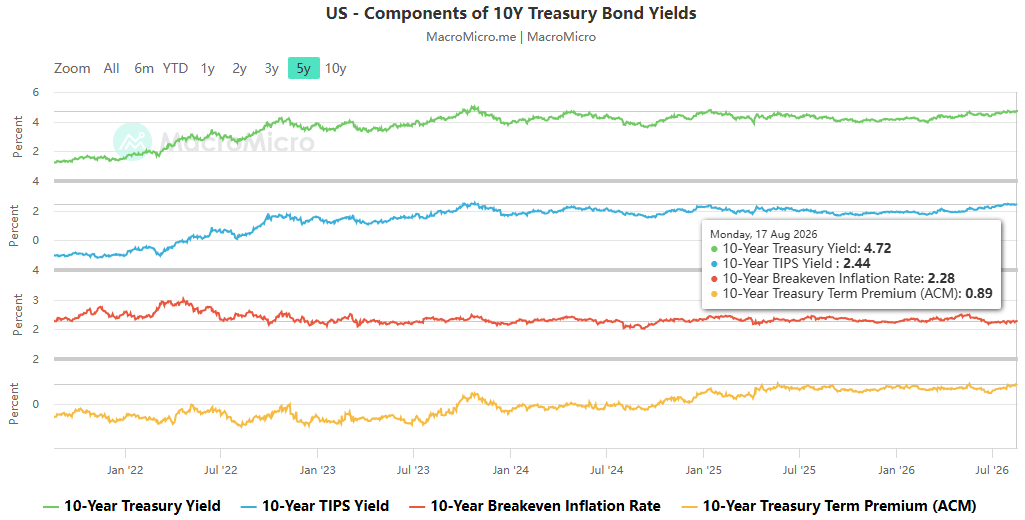
The expansion of the fiscal deficit is the core underlying driver of the pressure on long-term US debt.
ACE Markets analysis points out that the ever-expanding fiscal deficit in the United States is continuously suppressing US Treasury prices and pushing up yields from the supply side. The Congressional Budget Office has raised its annual deficit forecast to $2.1 trillion, an increase of $200 billion from its previous forecast, requiring the government to continue issuing new Treasury bonds to finance the debt. Faced with a massive increase in supply, the market will demand higher risk compensation, directly reflected in higher auction yields.
The recent 30-year US Treasury yield hit its highest level since 2001, while the 10-year yield also reached a new high since 2007. High interest payments further exacerbate the US fiscal burden, with interest payments on US Treasury bonds reaching $1.17 trillion this fiscal year, a 15% year-on-year increase, creating a mutually reinforcing cycle between debt size and financing costs. Looking at Europe, fiscal uncertainty stemming from French budget negotiations and the election is also impacting the pricing of its government bonds. The approaching debt rating review amplifies the volatility risk in the bond market. This also confirms the market logic of the “bond vigilante”: when investors worry about government fiscal instability, they will sell bonds to force fiscal restraint; this phenomenon has already spread to global bond markets outside the US.
The AI industry boom is reshaping capital flows and creating competition for funding with government bonds.
We have observed that the capital cycle of the AI industry is becoming an undeniable variable in the bond market, a point often underestimated by market analyses focused on inflation data. Our ACE Markets team has tracked significant activity, finding that large tech companies are heavily borrowing for data centers and AI infrastructure, leading to a substantial expansion in the supply of high-rated corporate bonds. Some tech giants are even expanding their overseas bond issuance channels. Furthermore, the credit ratings of some tech giants are superior to those of US sovereign debt, attracting substantial funds from long-term US Treasuries to corporate bonds.
Meanwhile, traditional overseas holders of US Treasury bonds continued to reduce their holdings: Japan, the UK, and China all saw significant declines in their holdings. The structure of US Treasury bondholders has undergone a qualitative change, shifting from policy-driven, price-insensitive official holders to private investors seeking returns and highly sensitive to prices, further increasing the term premium of 30-year US Treasury bonds. The financing needs of Silicon Valley companies and the issuance of US government bonds are essentially competing for the same pool of long-term market funds, and this conflict will continue to put pressure on the long end of the US Treasury bond market.
The Federal Reserve’s policy signals are ambiguous, and market expectations are diverging.
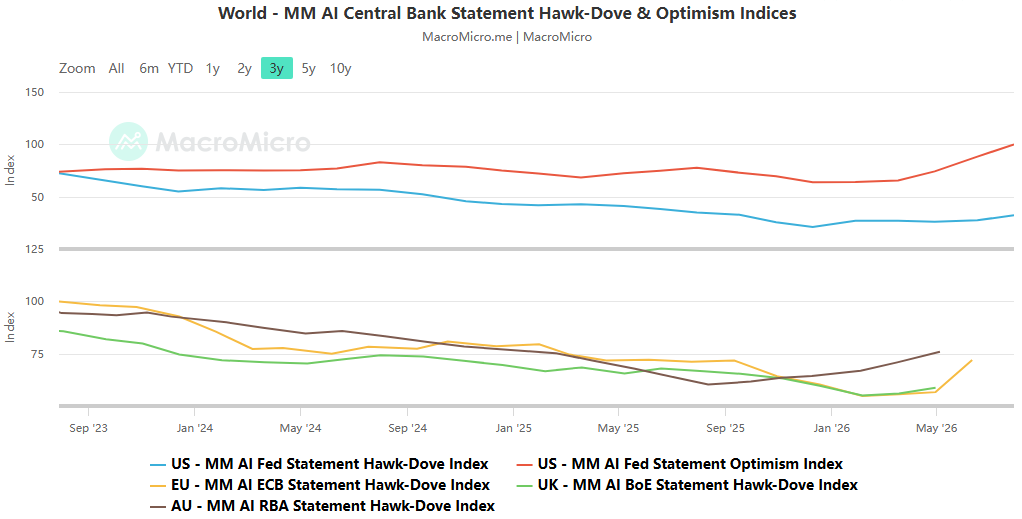
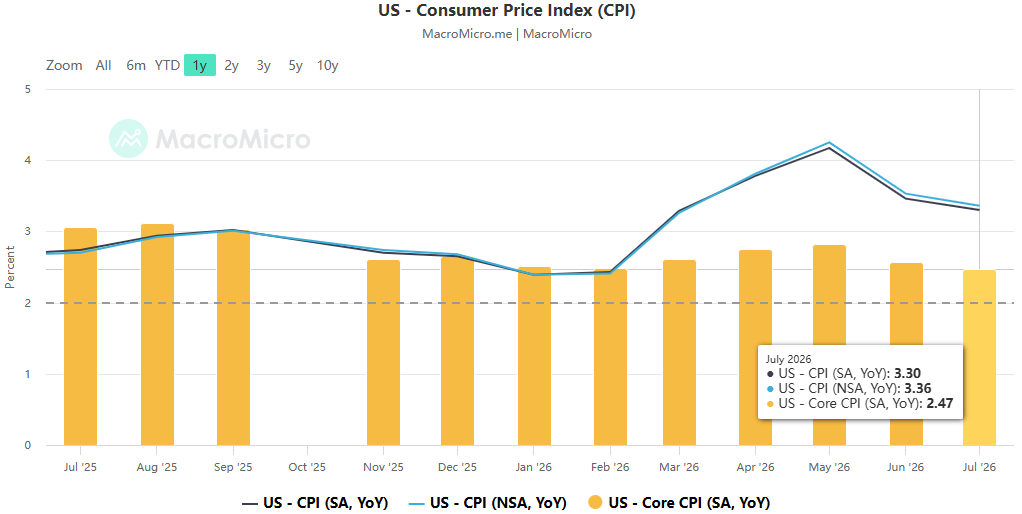
ACE Markets research team observed that changes in the Federal Reserve’s policy communication style have amplified volatility in the interest rate market. Currently, the Fed is reducing the advance release of forward guidance, leaving the market without a clear policy anchor and directly pushing up the risk premium for interest rates. Even though several US economic indicators, including inflation, employment, and retail sales, weakened in July, the July CPI rose 3.4% year-on-year, still above the 2% target. This short-term economic slowdown has failed to lower long-term US Treasury yields.
A clear divergence in market expectations has emerged: while long-term yields in the spot bond market remain high, the interest rate options market has begun betting on future rate cuts. The SOFR options market has seen a surge in call options expiring in 2027, with traders positioning themselves to hedge against potential rate cuts due to a future economic downturn. Multiple independent forecasting markets are highly consistent in pricing in a September rate stabilization by the Federal Reserve, with the probability of a September rate hike having significantly decreased.
This disconnect between high long-term bond yields and bets on future rate cuts has led to a steepening of the US Treasury yield curve, with the 2-year-30-year spread widening to its highest level since April. ACE Markets reminds traders that subsequent inflation, employment, and consumption data, as well as speeches by Federal Reserve officials, will quickly rewrite policy pricing, and the expected reversal will be faster than many traders anticipate.
ACE Markets Summary and Risk Warning
In summary, a short-term slowdown in the US economy may limit the Federal Reserve’s ability to further raise interest rates. However, four factors—the fiscal deficit, the AI-driven corporate financing boom, the changing structure of US Treasury buyers, and policy communication uncertainty—will continue to support long-term interest rates. For a significant decline in long-term US Treasury yields to occur, multiple conditions need to be met simultaneously: fiscal improvement, a cooling of corporate bond issuance, adjustments to the Treasury’s bond issuance strategy, and continued weak economic data.
The market has moved beyond the old paradigm of solely focusing on the Federal Reserve; the weight of sovereign debt sustainability and global asset allocation is steadily increasing. Many traders make judgments based on a single data point, easily misjudging the correlation between long-term bonds, the US dollar, and risk assets. Using ACE Markets’ multi-market cross-validation analytical framework, traders should simultaneously track PCE inflation data, US Treasury auction results, changes in overseas holdings, and corporate bond issuance, rather than solely focusing on Federal Reserve speeches.
| Disclaimer: The above represents only the market views of the ACE Markets research team and does not constitute any investment advice. Market risks exist; please carefully assess your own risk tolerance before trading. |
 English
  Chinese
  Vietnamese
  Hindi
Hindi  Japanese
  Thai
Thai  Korean