
Unveiling the Underlying Logic of Trading: ACE Markets Guides You Through the Core Mechanisms and Risk Control of Contracts for Difference
- April 15, 2026
- Posted by: ACE Markets
- Category: Featured Solutions
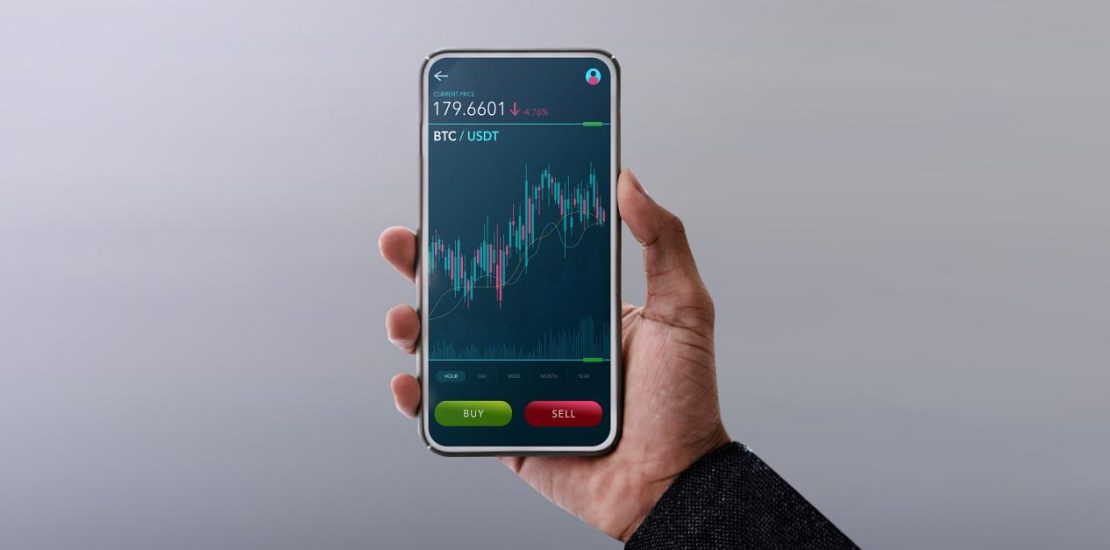
In the financial derivatives market, Contracts for Difference (CFDs) have become an important tool for global investors to allocate assets due to their flexibility and diversity. However, the mechanisms of leverage and margin, the composition of transaction costs, and potential risks are often blind spots for beginners. As a one-stop comprehensive financial platform built for traders, ACE Markets is committed to helping users establish a rational understanding of trading through technological empowerment and knowledge dissemination.
I. Leverage and Margin: A Double-Edged Sword of Capital Efficiency
The core feature of Contracts for Difference (CFDs) lies in their leverage. At ACE Markets, you only need to deposit a small fraction of the contract’s total value as margin to control the full value of the asset. For example, if the platform offers 100:1 leverage, you only need to deposit $1,000 in margin to trade a position worth $100,000. This mechanism significantly improves capital utilization, allowing small and medium-sized investors to participate in the significant fluctuations of major global markets—a flexibility unattainable in traditional stock markets.
However, while leverage amplifies potential gains, it also proportionally amplifies the risk of losses. Even minor market fluctuations can lead to a significant reduction in account equity, or even trigger forced liquidation, under leverage. Therefore, understanding the mechanisms of “margin levels” and “margin calls” is crucial. ACE Markets emphasizes that leverage is not a free lunch, but a money management tool that requires strict discipline. We advise users to prudently choose leverage levels based on their own risk tolerance, rather than blindly pursuing the highest possible level.
II. Composition of Transaction Costs: Explicit Costs and Implicit Losses
Many investors focus solely on spreads, neglecting the full picture of transaction costs. At ACE Markets, the main transaction costs consist of two parts: first, explicit costs, primarily the spread, which is the difference between the bid and ask prices offered by the platform—the price we pay for providing liquidity; and second, implicit costs, namely slippage, which refers to the deviation between the order execution price and the expected price, especially common during periods of high market volatility or liquidity shortages.
To help users reduce hidden costs, ACE Markets has invested heavily in building a high-performance aggregated liquidity engine. By directly connecting to top global banks and institutional brokers, we match the best quotes within milliseconds, minimizing slippage. Furthermore, investors holding positions overnight should be aware of overnight interest (Swap), which is the cost of funds calculated based on the interest rate differential between the two currencies. On the ACE Markets trading interface, all potential fees are transparently displayed, ensuring users are aware of the cost structure before opening a position.
III. Key Risk Disclosure: The Invisible Hand Beyond Volatility
Forex and CFD trading carries a high risk to your capital, a bottom line repeatedly emphasized by ACE Markets in all its promotional materials. In addition to the explicit risk of market price volatility, investors must also be wary of liquidity and systemic risks. Under certain extreme market conditions (such as a sudden war or the release of major economic data), market disruptions may occur, preventing orders from being executed at the expected price and resulting in significant slippage losses. This risk, inherent in the market mechanism itself, is often more destructive than simple misjudgments.
Furthermore, excessive trading and emotional decision-making are also major sources of risk that can erode capital. Without a robust trading system, frequent short-term trading can lead to an exponential accumulation of transaction costs, ultimately crippling the account. ACE Markets has observed that many losses stem not from incorrect market judgments, but from a disregard for risk management. Therefore, we consistently advise users to trade only with funds they can afford to lose and to prioritize risk management in strategy development.
IV. How to Conduct Risk Management: From Awareness to the Implementation of Tools
Effective risk management is the only way to sustain a trading career. At ACE Markets, we advocate a trading philosophy of “strategy first, risk control fundamental.” First and foremost, hard stop-loss orders are a mandatory part of every trade. By setting stop-loss orders, you can predefine the maximum loss you are willing to accept, transforming uncertainty into a definite number. This mechanical discipline is the first line of defense against human weaknesses.
Secondly, utilizing ACE Markets’ copy trading feature is also an advanced risk diversification method. By screening and following traders who excel in historical drawdown control and Sharpe ratios, you can automatically replicate their risk management logic, rather than simply copying profit signals. Simultaneously, allocating positions prudently and avoiding concentrating all funds in a single currency pair or highly correlated instruments is an effective way to reduce unsystematic risk. At ACE Markets, we provide multi-dimensional chart analysis tools and real-time information, aiming to help you focus on the art of trading itself while keeping risk under control.
 English
  Chinese
  Vietnamese
  Hindi
Hindi  Japanese
  Thai
Thai  Korean